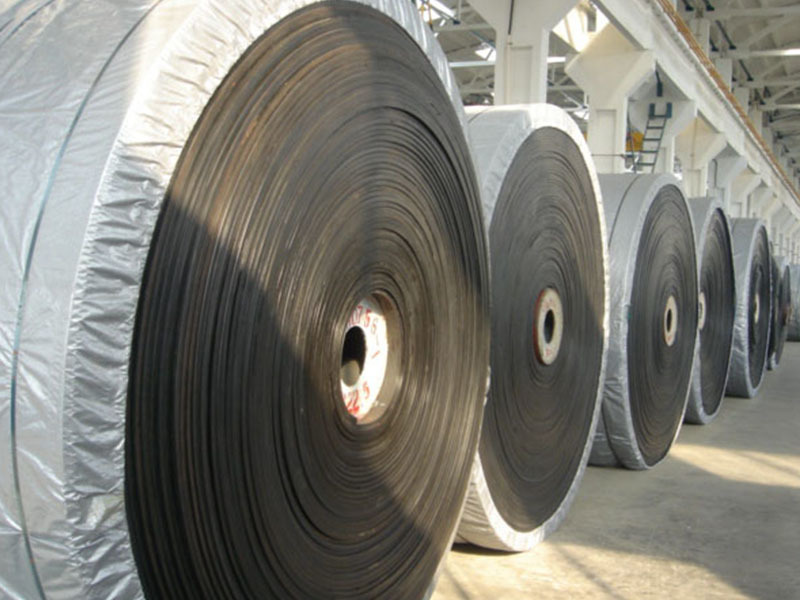
Nylon conveyor belt
Compared to conventional cotton-cord conveyor belts, nylon conveyor belts offer advantages such as high tensile strength, excellent elasticity, superior impact resistance, light weight, and good troughing performance. They can effectively reduce transportation costs and enable high-speed,…
Email: info@shenzhenconvbelt.com
Product Introduction
Features and Applications: Compared to conventional cotton-cord conveyor belts, nylon conveyor belts offer advantages such as high tensile strength, excellent elasticity, resistance to impact, light weight, and good troughing performance. They can effectively reduce transportation costs and enable high-speed, long-span, and long-distance conveying.
In addition to the many advantages of nylon conveyor belts, polyester conveyor belts also have the unique advantage of low elongation and completely unchanged strength in wet conditions. This makes them particularly important for long-distance conveying and in humid working environments.
The strength specifications available for nylon canvas and polyester canvas include: 100 N/mm, 125 N/mm, 200 N/mm, 150 N/mm, 250 N/mm, 300 N/mm, 400 N/mm, and others.
Implementation standard: GB/T 7984-2013 “Fabric-Cord Conveyor Belts for General Use”
Main Performance and Specifications
| Physical Properties of the Coating (Before Aging) | |||
| Performance type | Tensile strength / MPa ≥ | Tensile elongation at break/% ≥ | Wear volume/mm³ ≤ |
| H | 24 | 450 | 120 |
| D | 18 | 400 | 100 |
| L | 15 | 350 | 200 |
Note: H is used for conveying sharp, abrasive materials that severely damage belts; D is used for conveying highly abrasive materials; L is used for conveying moderately abrasive materials.
| Minimum Bonding Strength of Conveyor Belts with Synthetic Fiber Cord Fabric. | |||
| Project | Between fabric layers | Between the cover layer and the core strip | |
| Cover layer thickness: 0.8 mm ~ 1.5 mm | Cover layer thickness > 1.5 mm | ||
| Average value of all samples, N/mm² > | 4.5 | 3.2 | 3.5 |
| Minimum peak of all specimens, N/mm> | 3.9 | 2.4 | 2.9 |
| Note: The peak value of all samples should not exceed 20 N/mm. | |||