General-purpose flame-retardant conveyor belt
General-purpose flame-retardant conveyor belts are composed of rubber-coated nylon or polyester canvas combined with a cover rubber that exhibits certain flame-retardant and safety-enhancing properties. The belt surface features both flame-retardant and antistatic properties…
Email: info@shenzhenconvbelt.com
Features and Applications
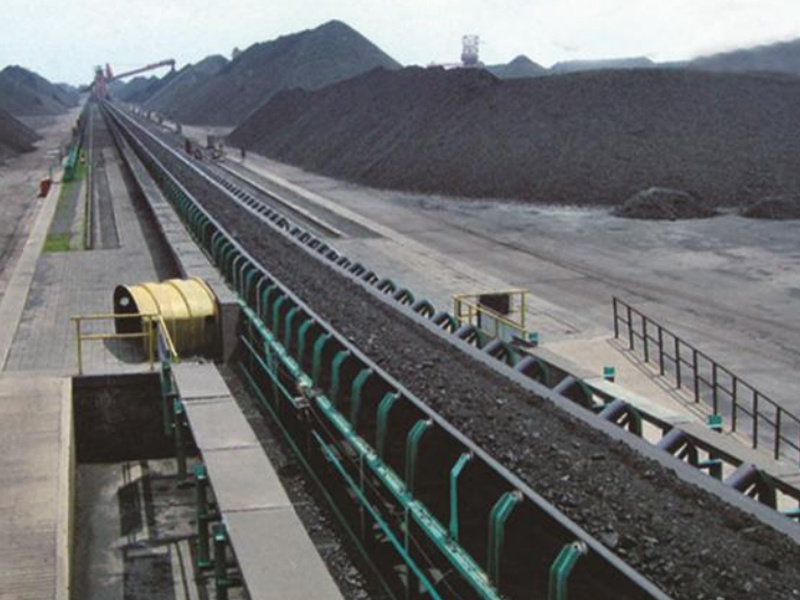
General-purpose flame-retardant conveyor belts are composed of rubber-coated nylon or polyester canvas combined with a cover rubber that exhibits certain flame-retardant and safety-enhancing properties. The belt surface features both flame-retardant and antistatic properties, enabling it to extinguish flames instantly. These belts are suitable for use in open-pit coal mines, thermal power plants, and other environments where static electricity is a concern.
Implementation standard
GB/T 10822-2014 “Flame-Retardant Conveyor Belts with Fabric Core for General Use”
Main Performance and Specifications
| D | 17 | 450 | 175 |
| L | 14 | 400 | 200 |
| Note 1: Type D is used for conveying highly abrasive materials, while Type L is used for conveying moderately abrasive materials. Note 2: When the covering layer thickness is between 0.8 mm and 1.6 mm, the specimen thickness may be the maximum thickness obtained by cutting. In this case, the tensile strength and elongation at break are permitted to be up to 15% lower than the values listed in the table. | |||
| K₁ | K₂ | K₃ | |
| Flame duration | The total flame duration for the three coated samples and the three uncoated samples combined shall not exceed 45 seconds. The individual value for a coated sample shall not exceed 15 seconds, and the individual value for an uncoated sample shall not exceed 20 seconds. | The total duration of flame spread for the six coated specimens shall not exceed 45 seconds, and no single value shall exceed 15 seconds. | The average duration of flame spread for the three coated specimens shall not exceed 60 seconds. |
| Electrostatic dissipation performance | No greater than 3 × 10⁸ Ω | ||
| Reigniteability | No flame should reappear on any of the specimens. | ||