Shenzhen Jinlong Conveyor Belt Co., Ltd.
Six Properties Buyers Often Evaluate on Rubber Conveyor Belts
Rubber-faced conveyor belts remain a default choice across mining, aggregates, ports, and general industry when impact, gouge resistance, and compound flexibility matter. Below are six qualities teams typically weigh during specification—not a substitute for ASTM/ISO belt tests or mine safety rules.
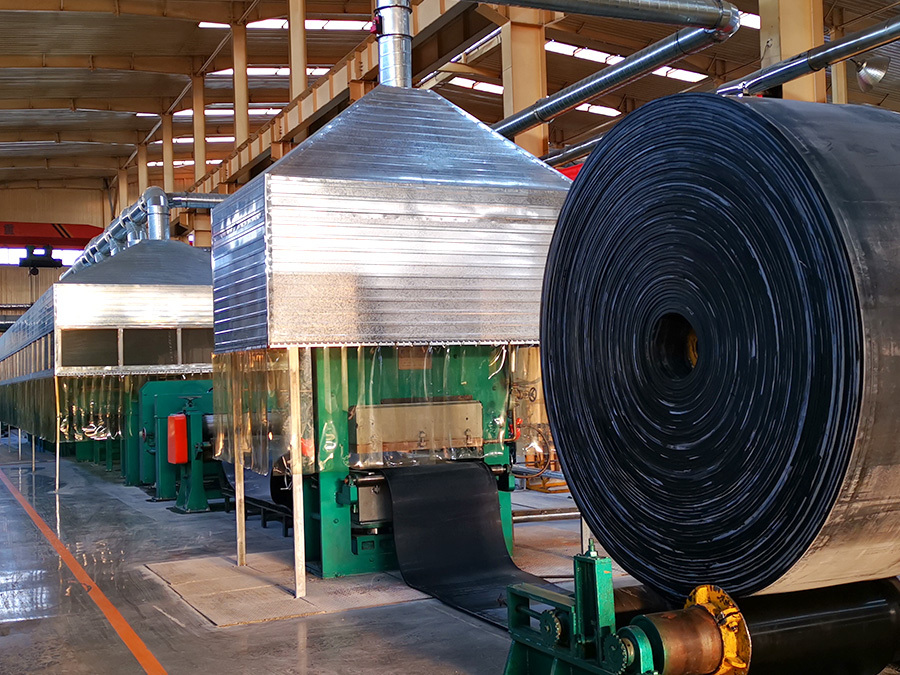
High tensile strength (carcass + cords)
Warp and weft fabrics or steel cords are designed to sustain running tension plus peak loads during starts and jams—always matched to pulley diameters and safety factors.
Wear-resistant covers
Rubber cover grades resist abrasion differently; thicker or harder compounds may trade off gouge absorption. Choose cover class for the grit size, speed, and loading method.
Vibration damping
Elastomeric belts absorb impulses from lumps and lumps-to-chute transitions better than rigid alternatives, easing stress on idlers where the belt is compliant.
Elastic recovery
After strain around curves and drive wraps, belts need elastic behaviour within design limits—too stiff a carcass can raise rolling resistance and splice stress.
Chemical and fluid resistance
Oils, solvents, and acidic condensate each call for dedicated compounds; catalogue “rubber belt” ≠ one formulation for every plant environment.
Ease of field service
Mechanical fasteners, cold/hot vulcanizing splices, and portable presses all depend on compatibility with carcass stiffness and ambient conditions—rubber constructions are familiar to belt crews worldwide.
Adapted for Shenzhen Jinlong Conveyor Belt Co., Ltd.; general buyer guidance, verify with datasheets for each belt line.
Ask for NN/EP/ST grades, heat or FR options matched to your duty.
Contact us